by Greg Martin, Valley Arts Group member
Expectations Blown Away
I was pretty sure what to expect when I entered through the double doors of the Whatcom Museum’s Lightcatcher exhibit space in downtown Bellingham WA this past Saturday. I was here to see and engage with the Greatest Wildlife Photographs special exhibit from the National Geographic. I have been immersed in the images of National Geographic magazines since I could open and hold a magazine, so let’s just say for many decades. But, my expectations were wildly eclipsed as I approached the first photo.
Sure, many images in the exhibit were familiar. But several things about this exhibit made familiar photographs amazing all over again, and several photos I have not seen filled me with awe. Awe not just for the spectacular narrative power of the picture. I was in awe of the extraordinary creativity, effort, skill, determination, and emotional power that went into the creation of images.
What is Different
So what was different? And why should anyone with interest in the practice of art, not just wildlife photographers, consider attending?
Large Format Imagery
First, all of the pictures were enlarged to a scale that allows the photographer’s use of light, color, composition, and textures even greater prominence. The increased size of these images, far beyond the spatial constraints of the print magazine lay out, to me, imbued the scenes with even greater emotional depth and power. And it was easier to explore the photographer’s use of perspective, movement, ambient light, and environmental context to compose the image and drive the narrative the photo visually communicates.

The Story Behind the Photograph
Second, the text accompanying the photograph described not only the scene presented, but the photographer’s effort to create the image. Some photos get a separate video that includes the photographer discussing the environment, setup, and intent for the scene they captured, and later post production efforts. The extraordinary dedication of these photographers, and their developed sense of finding and visually communicating what they see, comes through as you engage in a sensory, emotional, and cognitive dialogue with the image, the text, and your own imagination.
Larger Context of Exhibit
And finally, there is a larger interaction occurring as additional still and video imagery provides an overarching context for the evolution of photography at Nat Geo as an institution. In them you learn of the months of preparation, thousands of images, and many failures needed for the one snapshot that captures the essence of the encounter of the photographer with their subject(s). And then there are post production challenges, culling of images, differences of artistic opinion between photographers and editors, and deadlines to face. Another recognized element in the exhibit is the narrow aperture of who was supported and published in the magazine over its century in print as represented by the early decades of published photography on display. NatGeo is opening the aperture of inclusion as it develops new photographic talent with explicit support for younger and more diverse photographers in the field. With that effort comes new visions for what wildlife photography is, and can become.

Have to Go Back
I am going back for a second look. There is so much for me as a amateur photographer to experience and learn from this exhibit. A second viewing will allow me to perhaps give these extraordinary visual experiences another opportunity to reveal even deeper insights into the practice of a field of photography that blends superlative craft, extraordinary creativity, deep intuition, emotional sensitivity, environmental knowledge, and almost superhuman dedication.
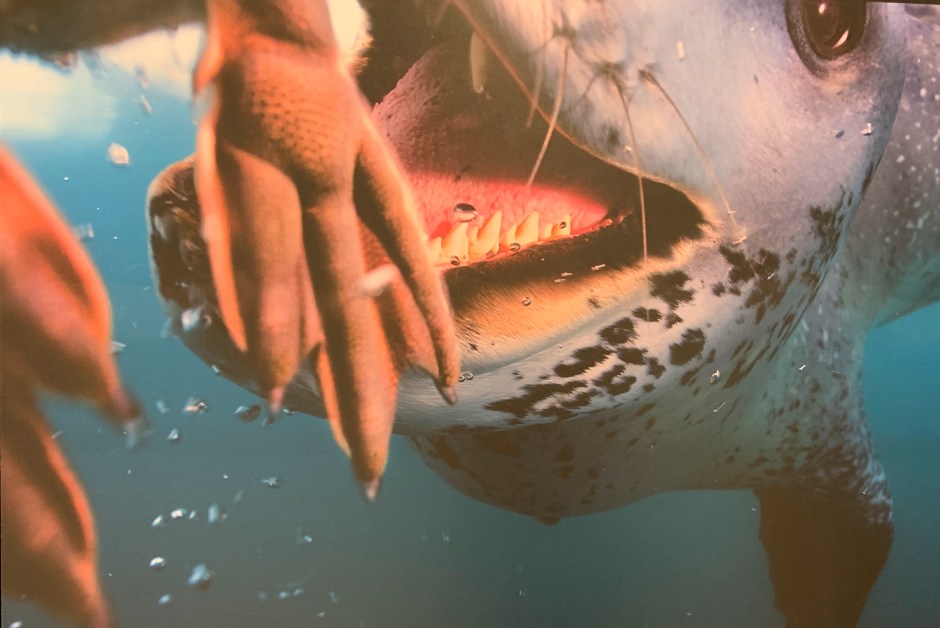
And that first image that struck home? You first become aware of a sea lion, mouth open, sharp white teeth on full display, initially dominating the picture. It takes a little while to begin seeing what else is in the image. And then you see them just to the left, inches away from the tearing canines of the sea lion are the plump orange feet of a penguin, swimming for its life, just out of reach. In this moment.
This exhibit is open until September 1st, 2024.
 Sudden Valley Art In the Barn